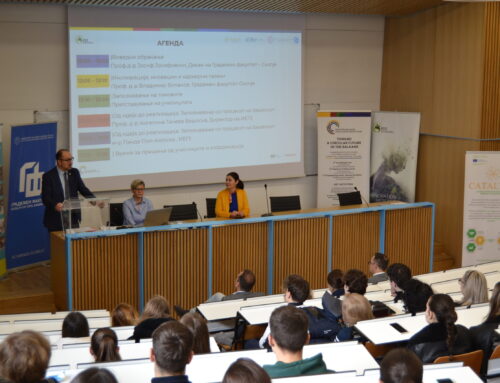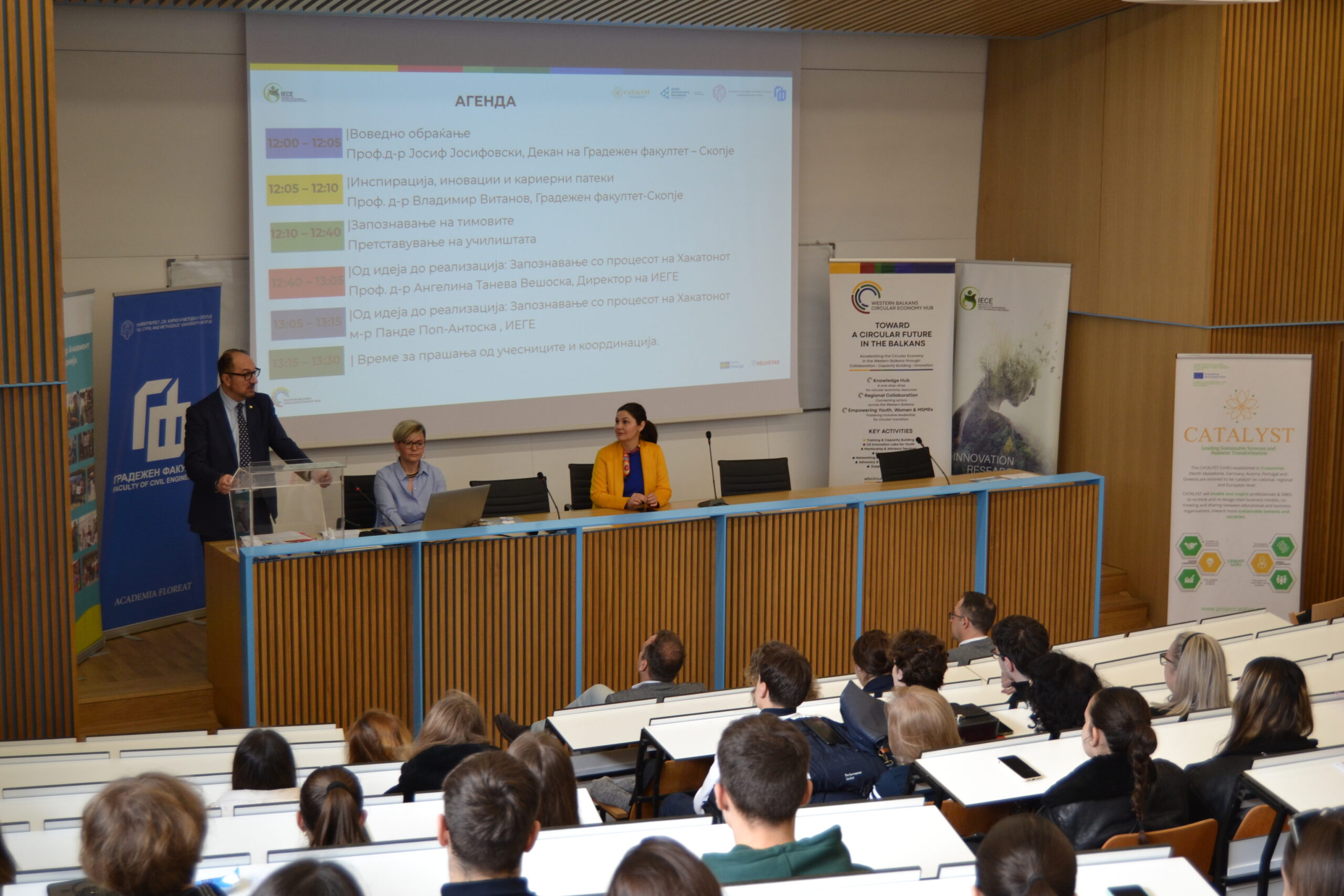
On February 27, organized by the Institute for Research in Environment, Construction, and Energy (IECE) and the Faculty of Civil Engineering – Skopje, a hackathon brought together 17 teams of young visionaries to shape the future. The hackathon “Youth Ideas for Sustainable Buildings” was not just a competition – it was a movement demonstrating that the green transition in North Macedonia has its new leaders.
A process that started with knowledge
The journey of the young innovators began long before the final event. The process started on February 13, when during the introductory session, 17 teams from 10 schools across the country and their mentors were introduced to the challenge. A key part of this preparatory period was the mandatory online course “Introduction to Circular Economy” on IECE’s educational platform. This course served as a crucial theoretical foundation, allowing students to understand circular economy foundations and main principles even before taking their first step in their projects.
The teams were divided into two groups and worked on two different scenarios designed to spark their creativity:
- “Circular Campus – Sustainable School of the Future”: A challenge to create educational spaces with zero waste and maximum energy independence.
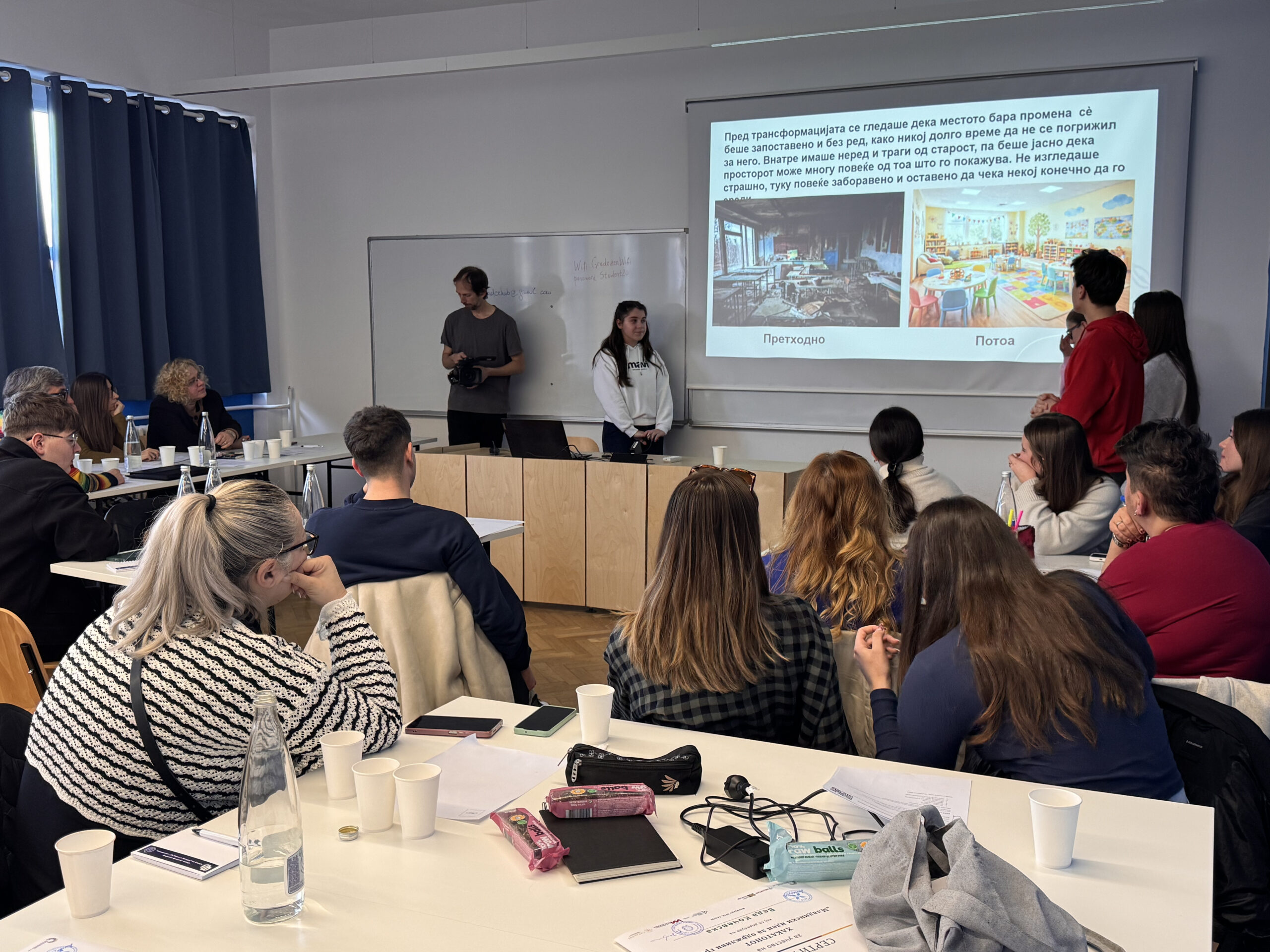
- “Circular Transformation of an Abandoned Public Building”: A vision for giving new life to forgotten structures through sustainability principles.
CO-IN © Model: Synergy for innovation
What set this event apart was the application of the CO-IN © model (Collaborative-Innovative Model) – a concept designed to enable collaboration and innovation. This approach created a strong bridge between the academic community, industry, and the NGO sector. In addition to the organizers IECE and the Faculty of Civil Engineering, the implementation process was supported by established partners such as Junior Achievement Macedonia, Construction Institute Macedonia (CEIM), and BAU Accelerator.
The Small Business Chamber from North Macedonia also contributed significantly, while two four-member mixed jury teams closely monitored and evaluated the ideas, seeking the perfect balance between innovation and applicability.
The hackathon was organized within the framework of the project Western Balkans Circular Economy Hub, supported by the RECONOMY Programme, as well as the CATALYST project, co-funded by the Erasmus+ Programme.
Recognition for the best solutions
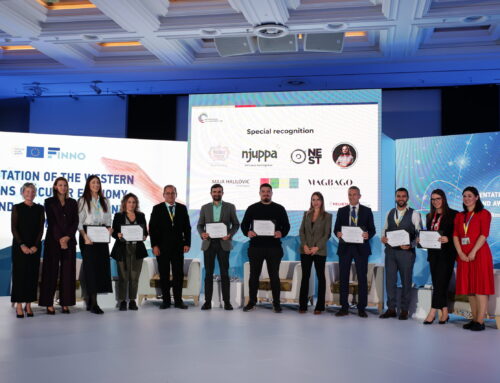
After the project presentations and detailed evaluation by the jury, the most successful teams were announced. As an incentive for their dedication and innovation, three awards were given for the best solutions in each of the two scenarios.
However, the organizers ensured that recognition was shared with all participants – all students received certificates and symbolic awards, as gratitude for their efforts and encouragement for further development of their knowledge and interest in sustainable construction.
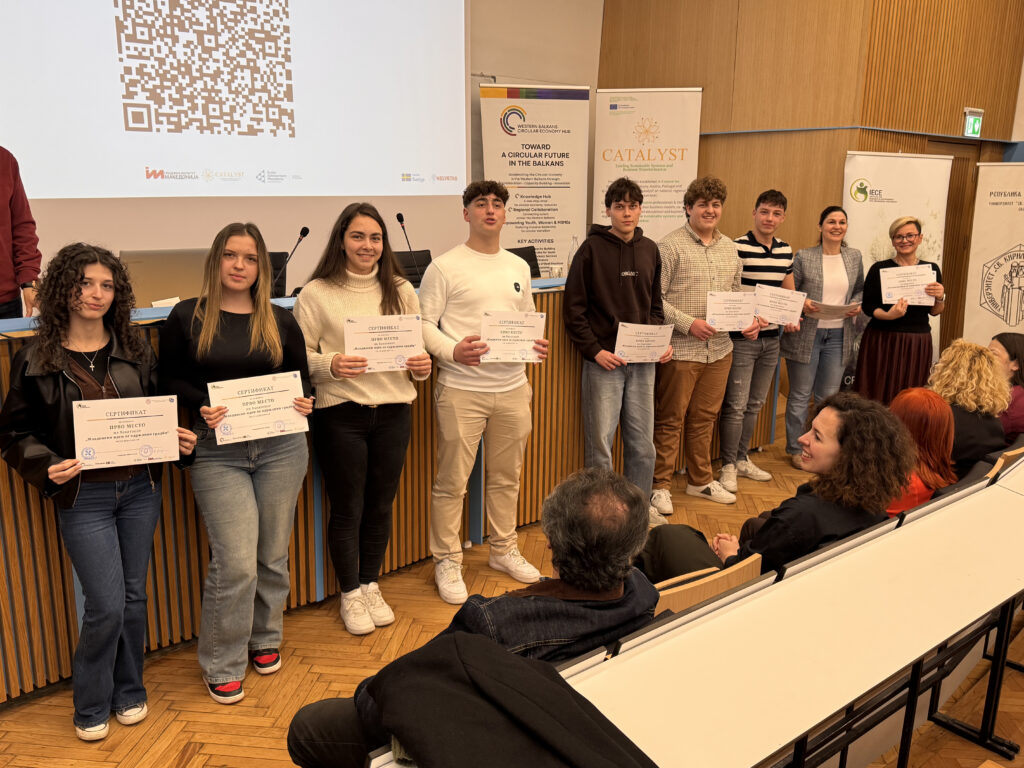
The two teams that won first place in the two hackathon challenges
Transformation for participants and the community
The benefits of this process were visible through the experiences of all involved. For the students, this event meant much more than a simple certificate.
- Skills and Career Orientation: Theoretical and practical knowledge on circular economy and direct contact with potential future universities and companies.
- Teamwork: Facing real environmental challenges through collaborative problem-solving.
“This is an experience that changes your perspective and teaches you new things. I recommend it to anyone interested in the planet’s future.” – Joci Gjorgjevska, student at the High School “Zdravko Cvetkovski”.
Support for teachers and schools
Mentor teachers gained access to over 70 professional courses on sustainability through IECE’s platform, enabling long-term enhancement of the teaching process.
“My expectations were exceeded. I was pleasantly surprised by the students’ motivation, which is a result of the interesting topics and good organization.” – Aleksandra Arsovska, mentor teacher at Gymnasium “Goce Delchev” – Kumanovo.
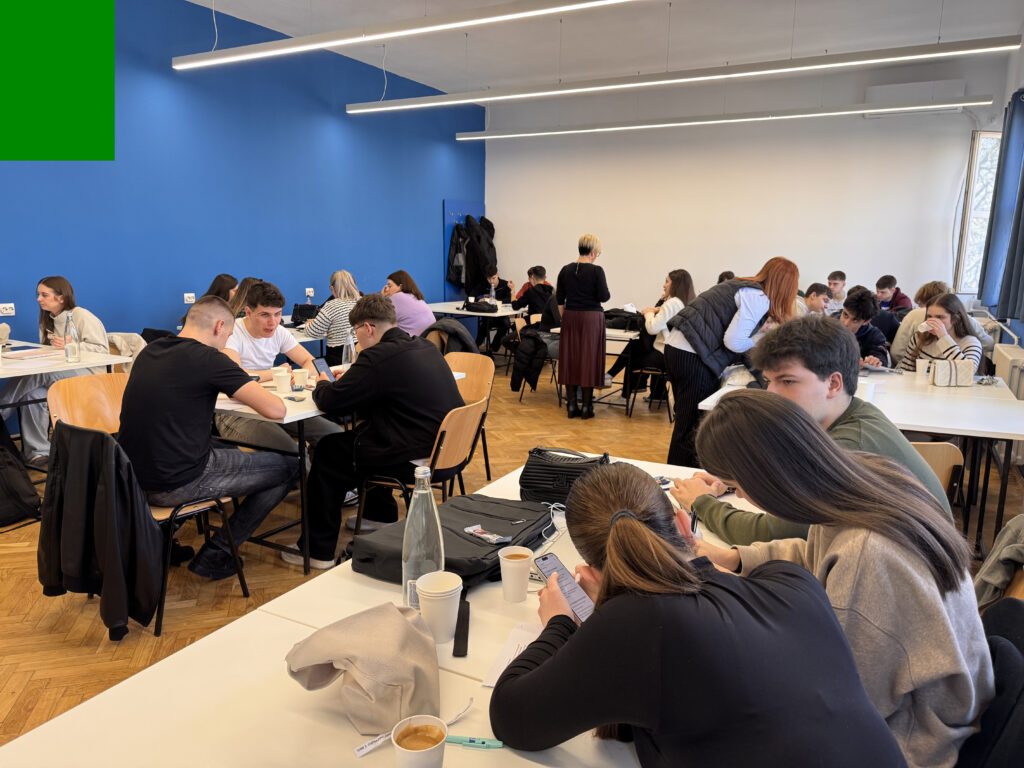
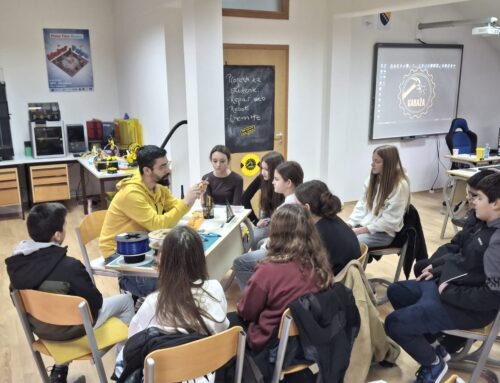
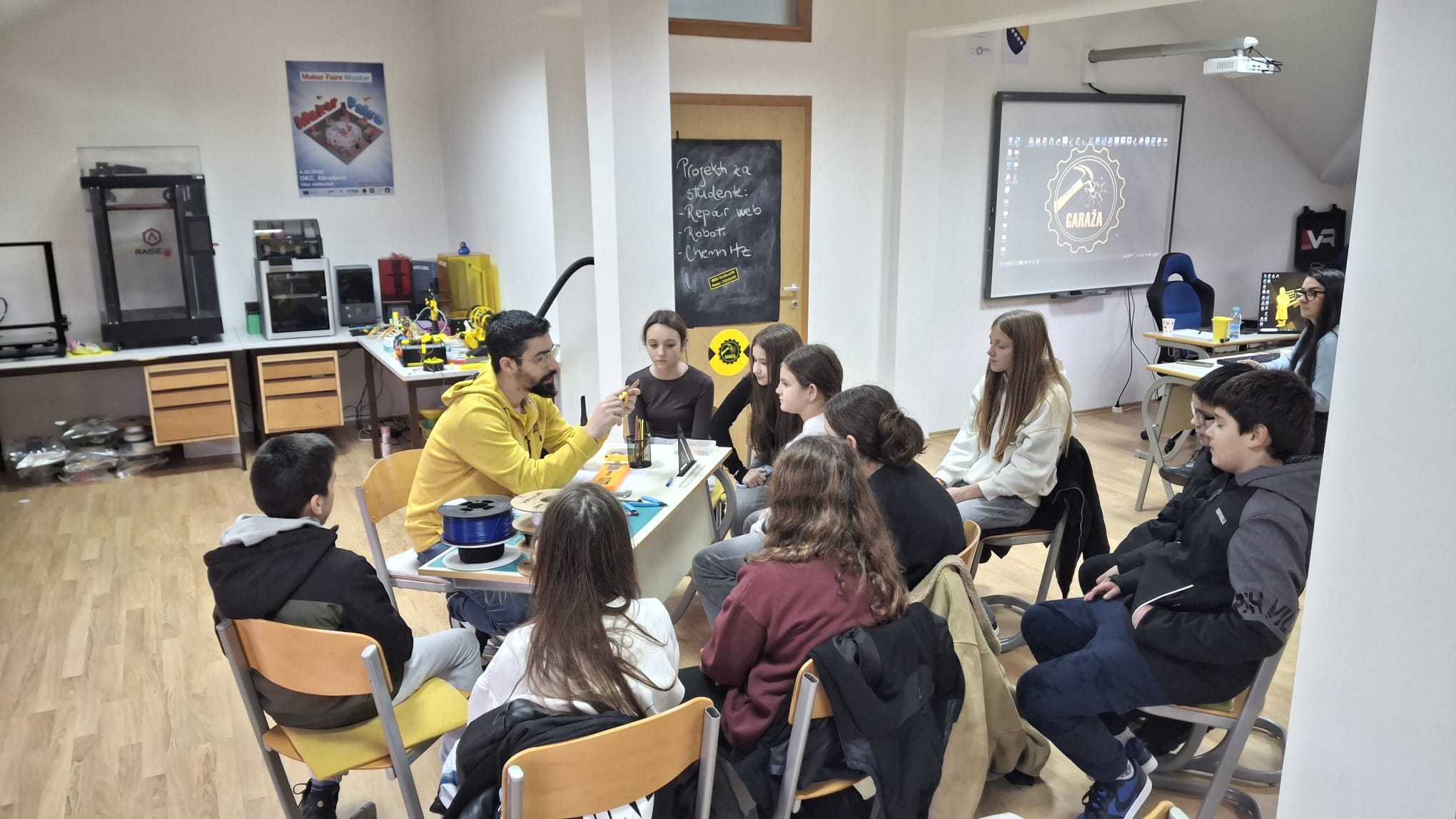
Students working on their solutions during the hackathon
For schools, this project meant improved research-based teaching and strengthened collaboration with the academic community, placing them on the map of educational institutions actively working on sustainable development.
This hackathon was not just a competition, but a powerful confirmation that the youth in North Macedonia possess the vision, knowledge, and energy to be the true drivers of the green transition. Through the synergy of the CO-IN © model and the joint dedication of IECE, the academic community, and industry, we demonstrated that a sustainable future is not just a distant goal – it is a reality we are already building today together with the new generations of leaders in construction.