On 13 February, the first introductory meeting of the hackathon organised by the Institute for Research in Environment, Civil Engineering and Energy (IECE), in tight collaboration with the Faculty of Civil Engineering, Skopje, was successfully held. The hackathon is implemented within two IECE initiatives: the Western Balkans Circular Economy Hub (WBCEH) and the CATALYST project.
The Western Balkans Circular Economy Hub (WBCEH) is a two-year regional initiative implemented by IECE and co-funded by IECE and the RECONOMY program. The Hub connects stakeholders across the six Western Balkan countries, fostering collaboration, knowledge exchange, and innovation to accelerate the transition to a circular economy. Its activities focus on strengthening skills and knowledge among the three main groups that the project is targeting – youth, women, and companies.
The CATALYST project (“European VET Excellence Centre for Leading Sustainable Systems and Business Transformation”), led by IECE and co-funded by the Erasmus+ Programme under the Centres of Vocational Excellence initiative, supports the green and digital transition of European economies. Through cooperation between education providers and businesses in five countries, CATALYST develops innovative vocational education programs, helps organisations and professionals gain knowledge, and redesigns their business models to become more sustainable, resilient, and future-ready.
The hackathon aims to introduce high school students in North Macedonia to circular economy principles, still an emerging concept in the region, while giving them the opportunity to work on real-life challenges.
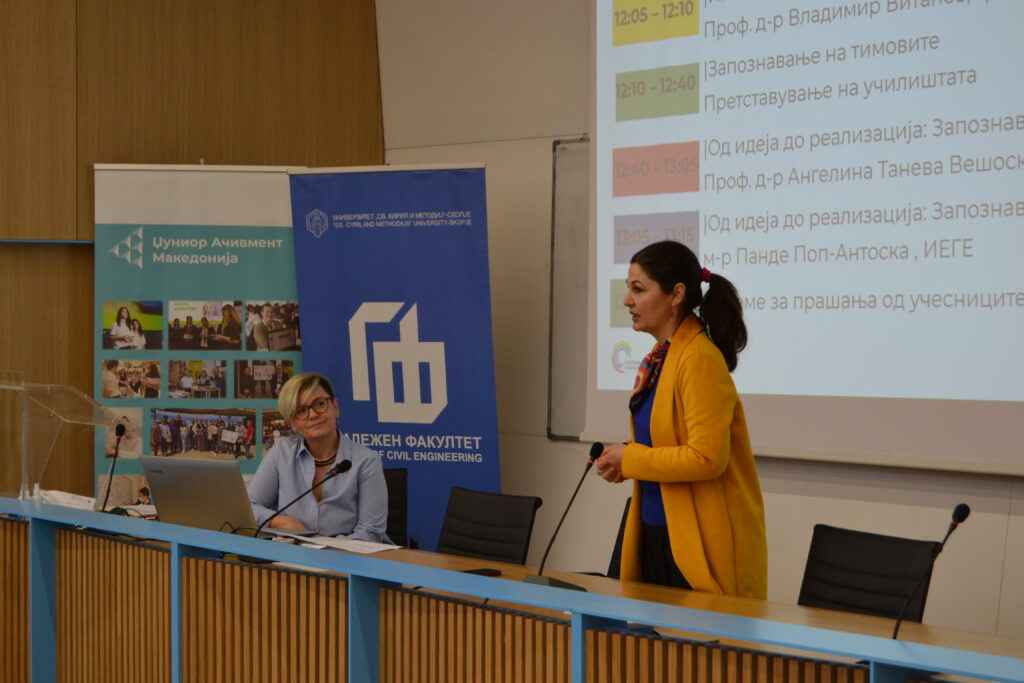
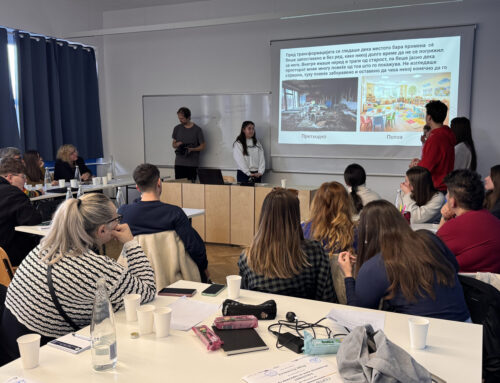
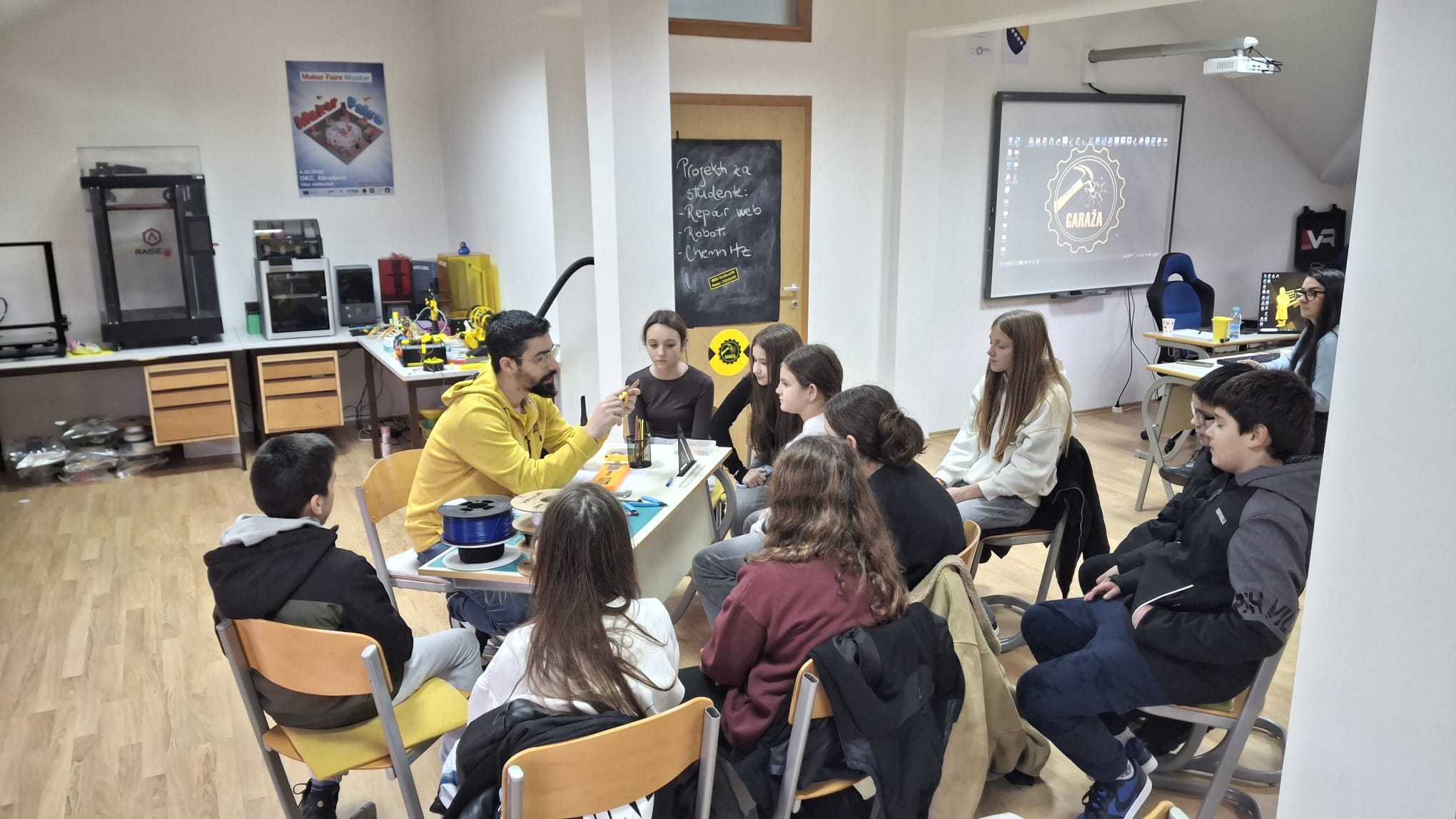
Welcome remarks from IECE’s team on the meeting held on 13 February
Why circularity in construction?
Construction is one of the oldest professions in human history, yet it has continuously evolved alongside society’s needs, technologies, and values. Today, the sector finds itself at yet another pivotal moment.
As one of the world’s largest consumers of energy and raw materials – responsible for nearly half of global raw material extraction and almost one-third of total waste generation – the construction industry must adapt to pressing environmental and climate challenges.
This transformation requires more than recycling. It calls for rethinking design and building practices, integrating sustainable and secondary materials, adopting innovative technologies, conducting energy and material audits, and embedding circular principles from the earliest planning stages. Across the Western Balkans, construction is identified as a priority sector in national circular economy roadmaps, as current practices remain largely linear and require urgent modernisation.
Strong interest from across the country
A total of 17 teams (three to five members each) from eight high schools across North Macedonia applied to participate. A mentor, a professor from their respective school, supports each team and guides them throughout the process.
The hackathon is structured in two parts.
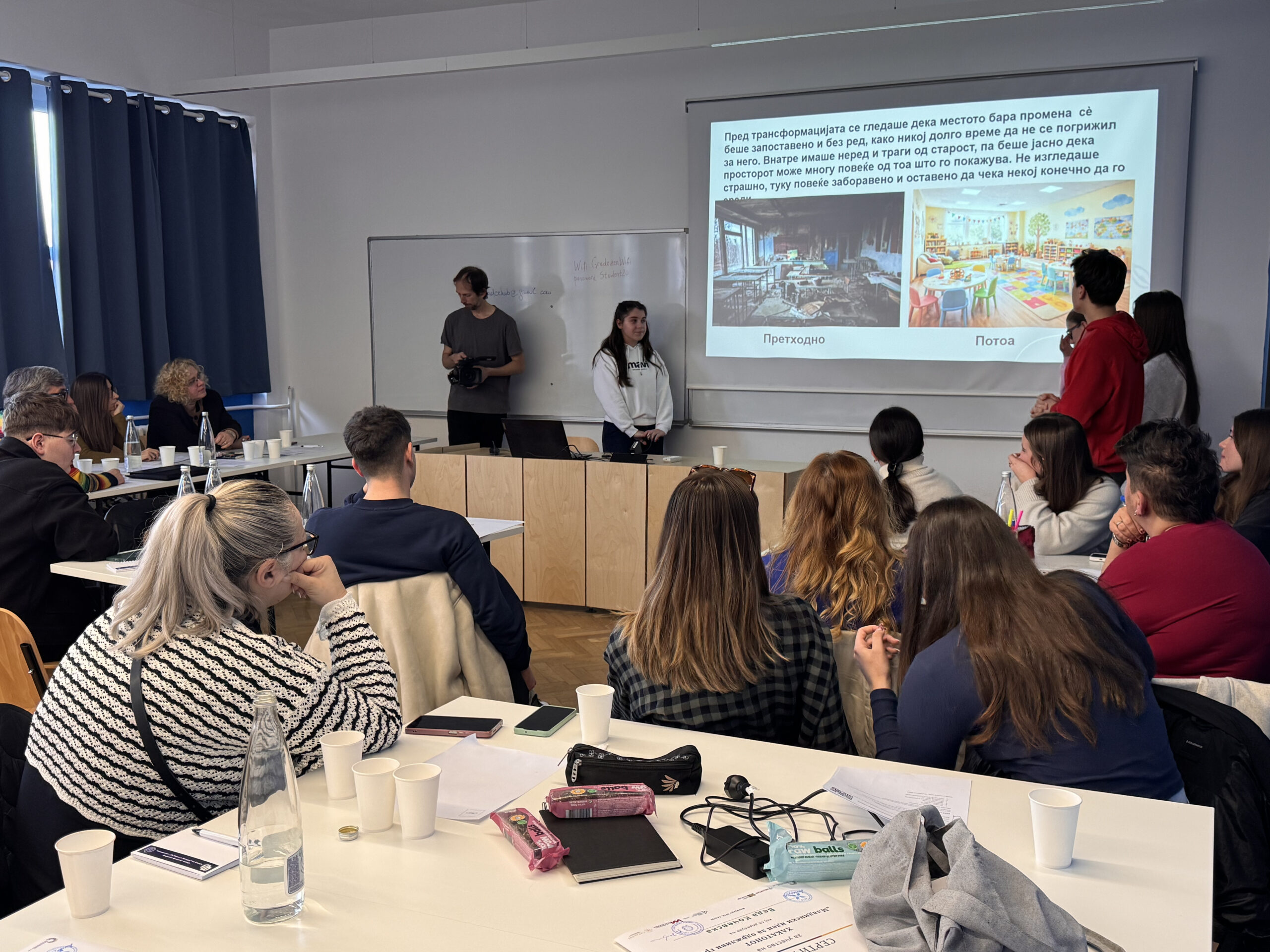
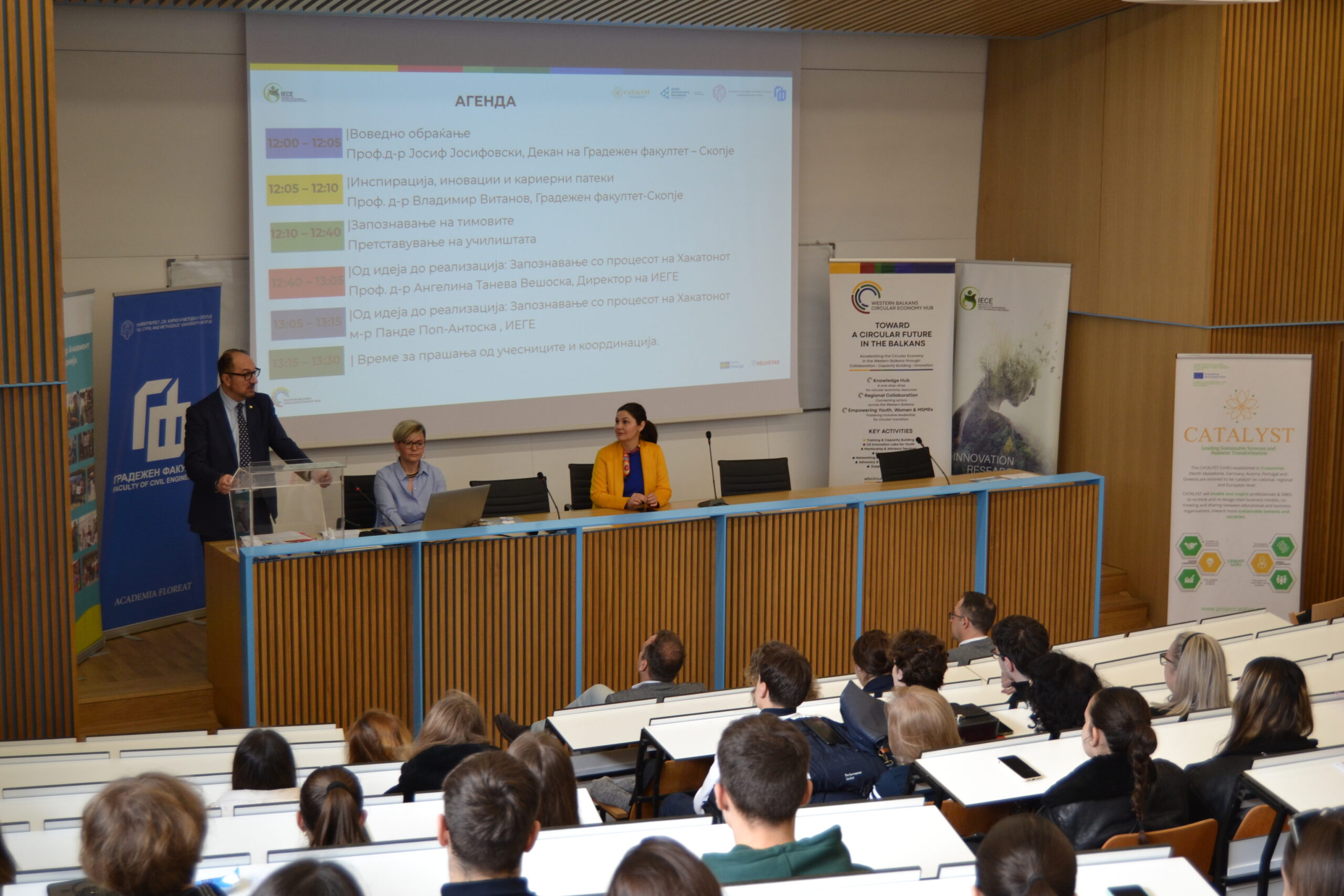
The introductory meeting, held at the Faculty of Civil Engineering, Skopje, provided an opportunity for participants to meet, learn about the rules and evaluation criteria, and better understand the challenge ahead. The event was officially opened by Angelina Taneva-Veshoska and Pande Pop-Antoska from IECE, followed by welcoming remarks from Josif Josifovski, Dean of the Faculty, and Vladimir Vitanov, Vice Dean for Education. The Dean, Prof. Dr Josifovski, emphasised that construction offers strong career prospects and significant potential for innovation and greening of the sector.
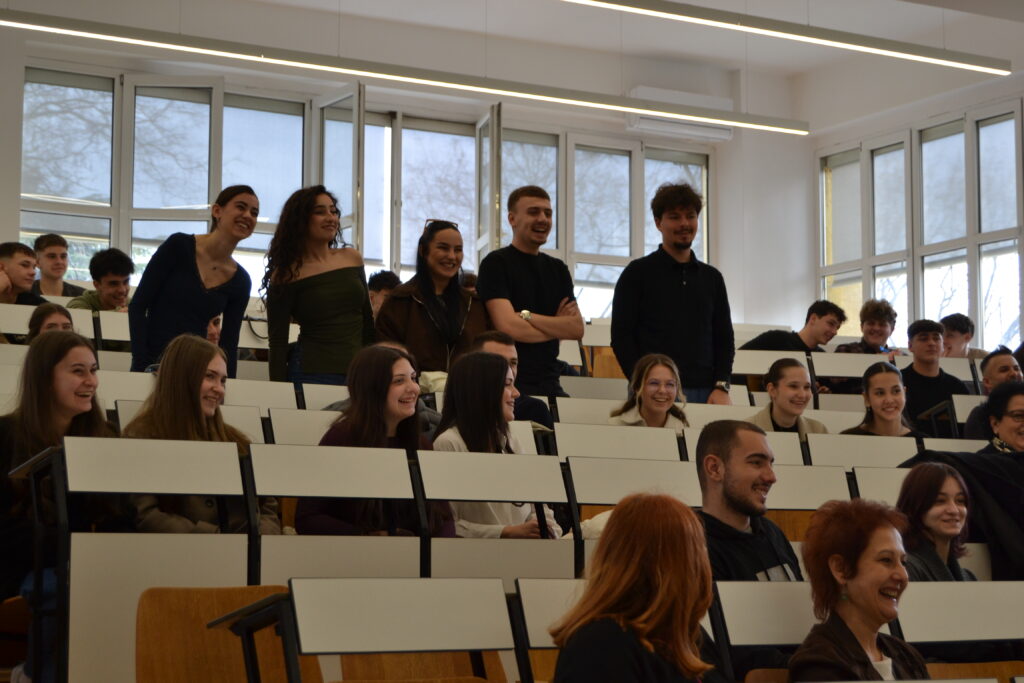
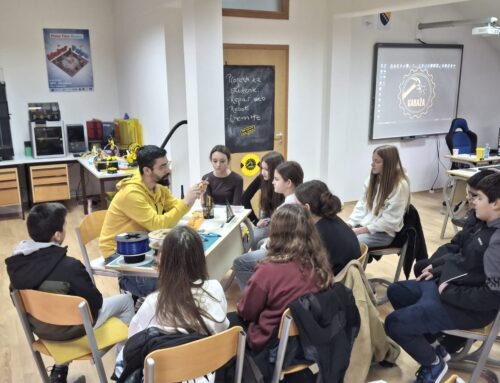
Teams introducing themselves at the first meeting on 13 February
Participation in the final event requires completion of the “Introduction to Circular Economy” course, developed by IECE for the WBCEH digital platform. The course provides a clear, beginner-level understanding of circular economy principles and the importance of moving away from the traditional linear model.
What comes next?
The main event will take place on 27 February at the Faculty of Civil Engineering, Skopje. During a full working day, teams will work on two practical challenges related to circular construction practices, supported by their mentors.
The hackathon is supported by Junior Achievement Macedonia, a non-profit organisation dedicated to fostering entrepreneurship, financial literacy, and work readiness.
The organisers and supporters believe this initiative will inspire long-term interest in circular economy topics and equip participants with knowledge and skills they can continue to develop throughout their future education and professional careers.